The Samba went from indoor soccer staple to fashion uniform so fast that a lot of people bought first and asked questions later. That is exactly why an adidas Samba review still matters. When a sneaker gets this popular, the real question is not whether it looks good in campaign photos. It is whether it still makes sense once the hype cools off and you are the one wearing it three times a week.
adidas Samba review: what makes it different
The adidas Samba is one of those rare shoes that works in multiple lanes at once. It has sportswear roots, obvious terrace energy, and enough fashion credibility to show up with wide-leg trousers, vintage denim, cargos, shorts, and even more tailored looks. Plenty of sneakers have heritage. Fewer have this kind of range.
A big part of that comes down to shape. The Samba sits low to the ground, has a slim profile, and avoids the oversized cushioning and bulk that dominate a lot of modern sneakers. That makes it feel sharper and easier to style than chunkier retro runners. It also means the Samba is not trying to compete on plush comfort. This is a style-first sneaker with real history, not a max-cushion daily beater.
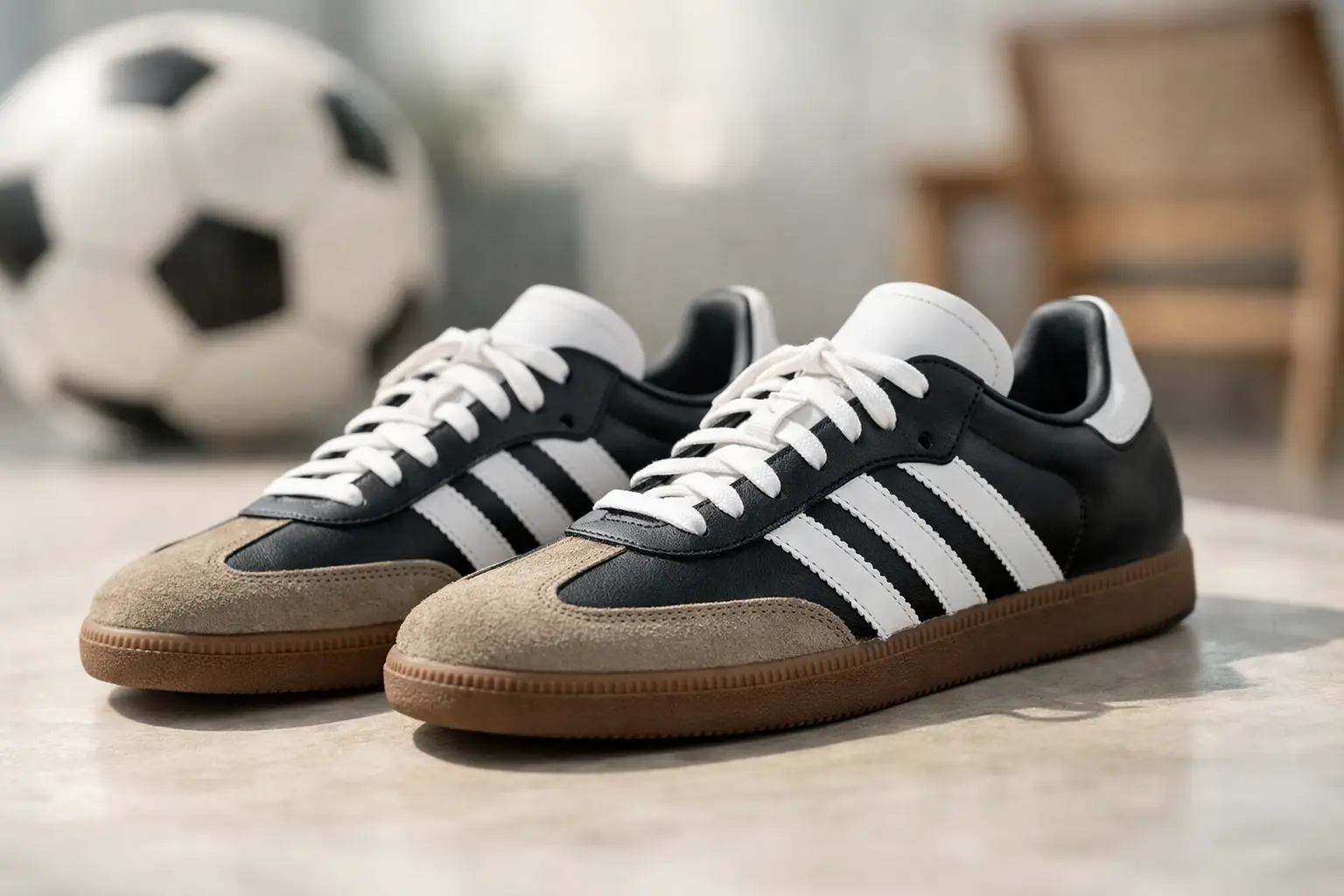
The signature details still do a lot of work: the T-toe overlay, the gum sole, the serrated Three Stripes, and that gold side branding. In white and black, it feels almost impossible to get wrong. In cream, green, brown, silver, or collaborative colorways, it can lean more directional without losing the original identity.
Fit and sizing
Sizing is where most people hesitate, and fairly so. The Samba has a narrow, tapered shape compared to many current lifestyle sneakers. If you have slim or average feet, going true to size usually works. The fit will feel snug at first, especially through the forefoot, but the leather tends to relax a bit with wear.
If you have wider feet, it gets more conditional. Some people can still wear their normal size and break them in over time. Others will be happier going up half a size, especially if they plan to wear thicker socks. The trade-off is that sizing up can make the length feel slightly longer than ideal, because the Samba is built to fit close.
The tongue and collar are lightly padded, which keeps the silhouette clean but does not give you much forgiveness. If you are used to something like a New Balance 550, Nike Dunk, or most retro basketball models, the Samba will feel more compact and less cushioned right away.
Comfort after real wear
The Samba is comfortable enough for casual use, but comfort is not its strongest selling point. That is the honest version.
For short days, commuting, going out, coffee runs, and everyday city wear, it does the job well. The flat sole gives you a grounded feel, and some people actually prefer that direct contact with the pavement over heavily cushioned sneakers. It feels stable, light, and easy to wear.
For all-day walking, travel, or long stretches on your feet, comfort becomes more debatable. The midsole is minimal, the arch support is average at best, and there is not much impact protection compared to newer lifestyle options. If your priority is pure comfort, there are better choices. If your priority is a clean sneaker that fits into almost every outfit, the Samba still makes a strong case.
The break-in period also depends on the version. Leather pairs can feel a little stiff out of the box, especially around the toe and side panels. Not painful for everyone, but not soft and forgiving either. Once worn in, they usually get better. The vegan and suede-heavy versions can feel slightly different, so material matters more here than people think.
Quality and build
The standard Samba OG offers decent quality for the price, though not every pair feels exactly premium. The leather is usually solid but not luxurious. The suede overlay on the toe adds texture and durability where the shoe needs it most, and the gum sole remains one of the best visual details on any classic adidas model.
Construction is generally reliable. The stitching is simple, the paneling is clean, and the shoe holds its shape well over time. That said, the Samba is now available in so many versions that quality can vary a bit between general release pairs, premium executions, and collaborations. You are often paying for colorway, scarcity, or brand crossover as much as materials.
What the Samba does better than a lot of trend-driven sneakers is age naturally. Creases do not ruin the look. Slight sole wear usually adds character. A pair with some mileage often looks better than a box-fresh pair, especially if you lean into the terrace and vintage sportswear angle.
Styling the Samba in 2026
This is where the Samba still wins.
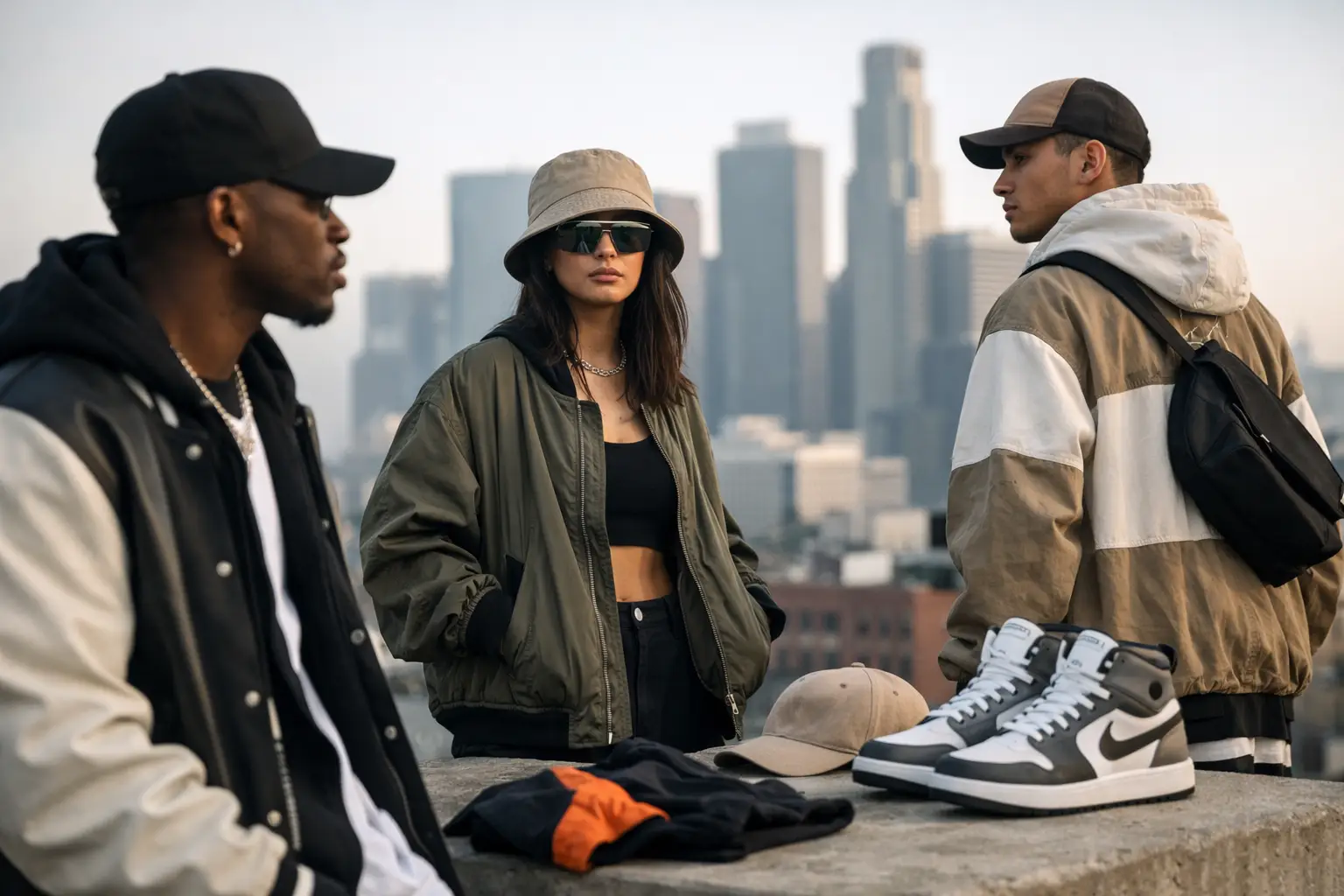
Even after years of heavy visibility, it remains one of the easiest sneakers to build around. That low shape means pants stack cleanly over it, and shorts do not make it look clunky. It works with straight denim, relaxed trousers, cropped pants, track pants, and simple athletic basics. If your closet already leans minimal, vintage, or streetwear-adjacent, the Samba probably slots in with almost no effort.
The most reliable move is still simple: white or black pair, visible socks, straight-leg pants, clean top layer. But there is also room to push it. A brown or green Samba with washed denim and a cropped jacket feels a lot more considered than another all-white leather sneaker. Collaborative versions can bring more personality, though some lean harder into trend cycles and may age faster stylistically.
The only real styling limitation is proportion. If your wardrobe is built entirely around big, wide, heavily stacked silhouettes, the Samba can sometimes look too slight. In those cases, a Gazelle Indoor, Handball Spezial, or bulkier retro model may balance better.
Is the hype still justified?
Yes, but with an asterisk.
The Samba earned its place because it solved a real style need. It is cleaner than a skate shoe, less expected than an all-white tennis sneaker, and easier to wear than most statement pairs. It hit at the exact moment fashion moved away from oversized sneakers and toward slimmer, flatter silhouettes. That shift helped turn the Samba from a classic into a phenomenon.
But popularity can also flatten nuance. Not every version is a must-buy. Not every collaboration deserves resale attention. And not every person needs a Samba just because it appears on every mood board, sidewalk, and social feed. If you already own several low-profile classics, the Samba is less of a revelation and more of a refined rotation piece.
For newer buyers, though, it still makes sense. It is one of the few shoes that can feel current, archival, and practical at the same time. That is hard to fake.
adidas Samba review vs similar options
If you are choosing between the Samba and other adidas staples, the differences are pretty clear. The Gazelle is softer in appearance and often feels a little more casual because of the suede-heavy upper. The Handball Spezial has a similar terrace appeal but usually reads slightly wider and a touch less sharp. The Samba is the crispest and most versatile of the three, especially in classic leather colorways.
Against Nike options like the Cortez or Killshot 2, the Samba has more cultural momentum right now and arguably more styling flexibility. Against retro indoor or terrace pairs from brands like Puma and Onitsuka Tiger, it still holds an advantage in recognizability, though that also means it is less unique.
That is the real trade-off. The Samba is easy to wear because everybody understands it. But if you are trying to avoid the most obvious choice in the room, there are now plenty of alternatives chasing the same lane.
Who should actually buy the Samba
If you want one sneaker that covers everyday wear, fits into modern streetwear and casual fashion, and carries genuine history, the Samba is still a smart pickup. It is especially strong for people who value shape, versatility, and cultural relevance over pillow-soft comfort.
If you have wide feet, need serious support, or mostly wear oversized pants and bulkier silhouettes, it may not be the best match. And if you are exhausted by any sneaker once it becomes too visible, the Samba might already feel overplayed.
None of that changes the core fact: the Samba remains one of the clearest examples of a classic sneaker still doing real work in a current wardrobe. Plenty of shoes get a moment. Very few still look this convincing after everyone catches on.
If you are buying with your own rotation in mind instead of chasing the loudest wave, the Samba is still easy to justify.