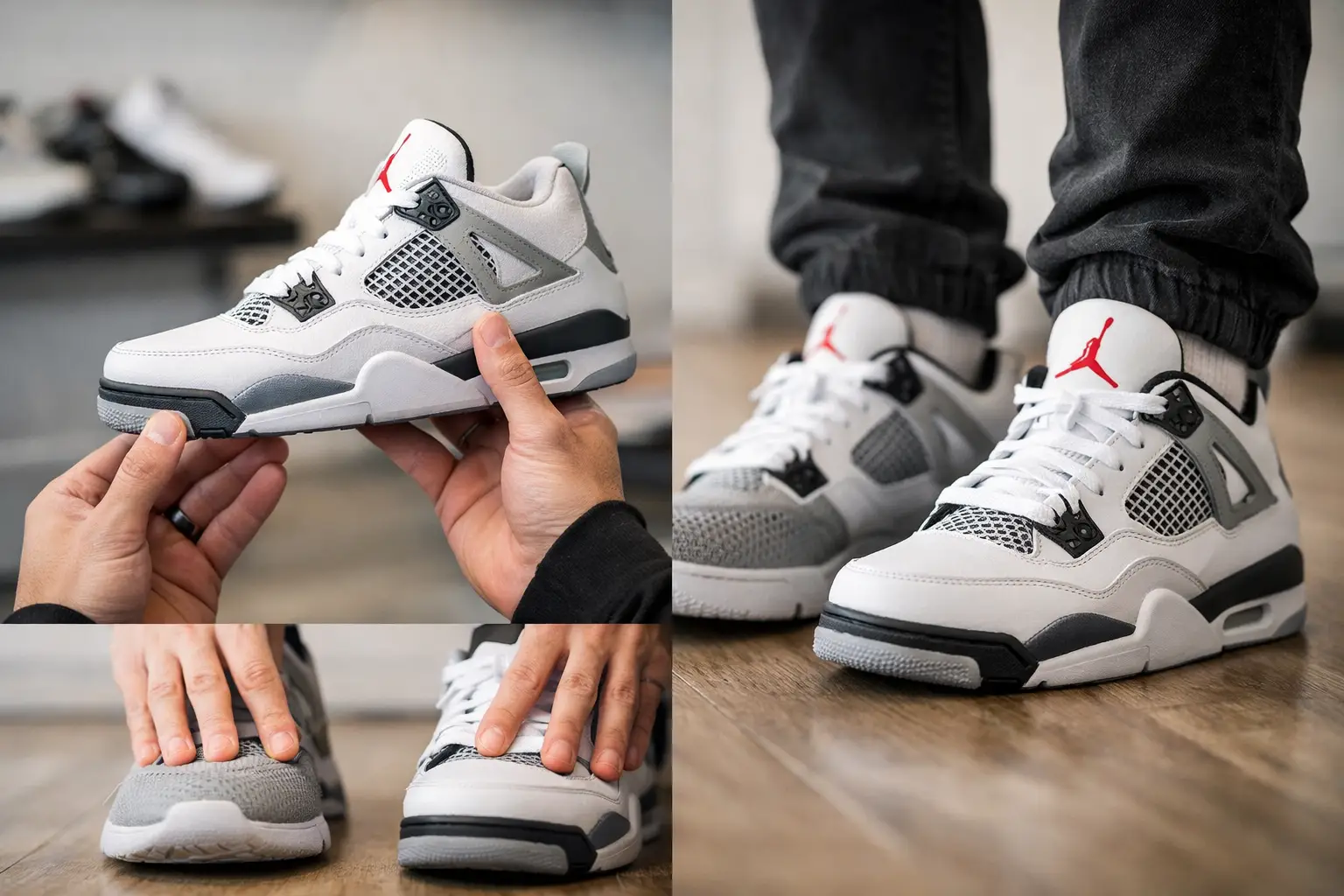
The question is simple: do Jordan 4 run small? For most people, not exactly - but they can feel snug straight out of the box. The Air Jordan 4 has a structured upper, a firm midsole, and a relatively narrow-feeling forefoot compared with softer, more forgiving everyday sneakers. That combination makes the first try-on more important than the number on the size tag.
If you know your usual Nike or Jordan size, start there. Then let your foot shape, sock preference, and intended use decide whether you should stay true to size or go up half a size.
Do Jordan 4 Run Small or True to Size?
The Air Jordan 4 generally runs true to size, especially for average-width or narrow feet. A men’s size 10 in most modern Jordan 4 releases should fit similarly to a size 10 in many other Air Jordan Retros.
The catch is that “true to size” does not always mean instantly comfortable. Jordan 4s can feel tighter across the toe box and around the sides of the foot during the first few wears. The plastic wing system and layered leather or synthetic materials give the shoe its unmistakable shape, but they also create a more locked-in fit than a flexible mesh runner.
For wide feet, sizing up half a size is often the smarter move. It gives the forefoot a little more breathing room without making the heel feel wildly loose. If you are between sizes, the half size up is usually the safer choice too, particularly if you plan to wear thicker socks.
Why Jordan 4s Can Feel Tight at First
The Jordan 4 is not built like a modern performance basketball shoe, even though it began life on the court. Its fit is heavily shaped by the materials and design language of 1989. Leather overlays, reinforced panels, padded ankle support, and visible mesh all contribute to a shoe that feels substantial rather than soft.
The toe box is the main issue for many wearers. It is not necessarily short, but it can feel low and firm over the top of the toes. People with high arches, broad forefeet, or wider pinky-toe areas often notice that pressure first.
There is also less natural stretch than you might get from a knit sneaker. A leather Jordan 4 can soften over time, but do not expect a dramatic break-in. If your toes are already pressed against the front or the sidewalls feel painful while standing still, buying a larger size is better than hoping the shoe will completely change shape.
The break-in period is real, but limited
A fresh pair of Jordan 4s often becomes more comfortable after several casual wears. The collar padding settles, the insole starts to mold slightly to your foot, and the upper becomes less stiff. That said, breaking them in should improve the feel, not rescue a bad fit.
Wear them around the house for 30 to 60 minutes before taking them out for a full day. Keep the laces slightly relaxed at first, especially through the middle eyelets where the upper can pinch. If you feel numbness, sharp pressure, or repeated toe contact, stop there. A sneaker that hurts indoors will not feel better after eight hours on the street.
Jordan 4 Sizing by Foot Type
Your foot shape matters more than broad sizing rules. Two people can wear the same measured size and have completely different Jordan 4 experiences.
Narrow or average-width feet
Go true to size. You should get a secure heel, enough length in the toe, and the close, supportive fit the silhouette is known for. If you prefer a more locked-down feel for occasional basketball or active wear, true to size is the move.
Be careful about going down half a size just because you like a snug fit. Jordan 4s already have a structured, relatively compact forefoot. A smaller size can create pressure quickly, especially once your feet swell during a long day.
Wide feet
Go up half a size in most cases. The added length is usually manageable, while the extra room across the forefoot can make a major difference. Lace them securely through the top eyelets to keep the heel from slipping.
A full size up is rarely necessary unless you have very wide feet or consistently size up in other leather Jordan models. Too much length can cause heel movement, creasing in the wrong place, and that awkward feeling of the shoe bending ahead of your toes.
High arches or high insteps
You may want to go up half a size, even if your feet are not especially wide. Jordan 4s can feel restrictive across the top of the foot because of the layered upper and lace wings. Loosening the middle section of the laces can help, but a little added volume is often more comfortable.
Between sizes
Choose the half size up. The Jordan 4 is easier to fine-tune with lacing and socks than it is to stretch in length or width. A slightly roomier pair can be adjusted. A pair that is too short becomes a pair you leave in the box.
How Jordan 4s Compare With Other Popular Jordans
If you already own a few pairs, comparing silhouettes is more useful than relying on generic sizing charts.
Jordan 1s usually feel longer and more accommodating in the toe box than Jordan 4s. If you wear a Jordan 1 true to size with a bit of room, that same size in a Jordan 4 may feel noticeably more fitted. Most people can still wear the same size in both, but wide-footed wearers are more likely to size up in the 4.
Jordan 3s are often perceived as slightly more comfortable out of the box because the upper has a different shape and the forefoot does not feel quite as restrictive. If your Jordan 3 size is perfect but close, consider going up half a size in Jordan 4s.
Jordan 11s tend to have their own snugness around the patent leather mudguard. If you already size up half a size in Jordan 11s due to toe pressure, that same approach may work well for Jordan 4s. The pressure points are different, but the logic is similar: structured materials do not offer much forgiveness.
Compared with Nike Dunk Lows, Jordan 4s feel more padded and secure through the heel but less relaxed across the upper. Compared with Air Force 1s, they feel much less roomy. Do not use your Air Force 1 size as your Jordan 4 reference unless you normally size down in Forces.
The Best Way to Check Your Jordan 4 Fit
When you try on a pair, do not judge it only by whether you can get your foot inside. Stand up, walk for a few minutes, and check three areas: your toes, the widest point of your forefoot, and your heel.
You want roughly a thumb’s width of space in front of your longest toe. Your toes should not touch the front while walking downhill or bending your foot. Across the forefoot, the upper should feel secure but not create a hot spot around your pinky toe or the side of your big toe.
At the heel, mild movement is normal, especially before the shoe breaks in. Actual slipping is not. If your heel lifts with every step after you have tied the laces properly, the pair may be too big.
Try them with the socks you actually wear. Thin dress socks can make almost any sneaker seem roomier, while thick athletic socks can turn a borderline fit into a problem. Most Jordan 4 wearers get the best balance with standard crew socks rather than ultra-thick pairs.
Styling Should Not Dictate a Bad Size
A slightly oversized Jordan 4 can look great with baggy denim, cargos, or relaxed sweatpants. A snug true-to-size pair can work perfectly with tapered pants or shorts. But fit should come before the visual idea of how the shoe sits under your hem.
Jordan 4s are already a substantial silhouette. You do not need to size up for a chunkier look, and you should not size down to make them look sleeker. The best-looking pair is the one that lets you walk naturally and wear them often enough to make them part of your rotation.
For most collectors and everyday wearers, the answer is straightforward: buy Jordan 4s true to size if your feet are average or narrow, and go up half a size if you are wide-footed, high-arched, or caught between sizes. Get the fit right first, then let the colorway do the talking.