The fastest way to overpay for fake pairs is to treat resale like regular e-commerce. If you want to know how to buy authenticated sneakers, the real skill is not just finding the pair - it is knowing which parts of the transaction actually protect you when something goes wrong.
In sneakers, product demand moves fast, but trust moves slower. Photos can be borrowed. Descriptions can be vague. A seller can have a clean-looking profile and still ship a pair that was repaired, swapped, or never authentic to begin with. That is why smart buyers do not start with the shoe. They start with the transaction model.
How to buy authenticated sneakers without guessing
The safest purchase is not simply a pair labeled authentic. It is a pair sold through a system built to verify condition, legitimacy, and fulfillment before the item reaches you. That means looking past hype and price for a moment and asking a more practical question: who controls authentication, payment protection, and shipping?
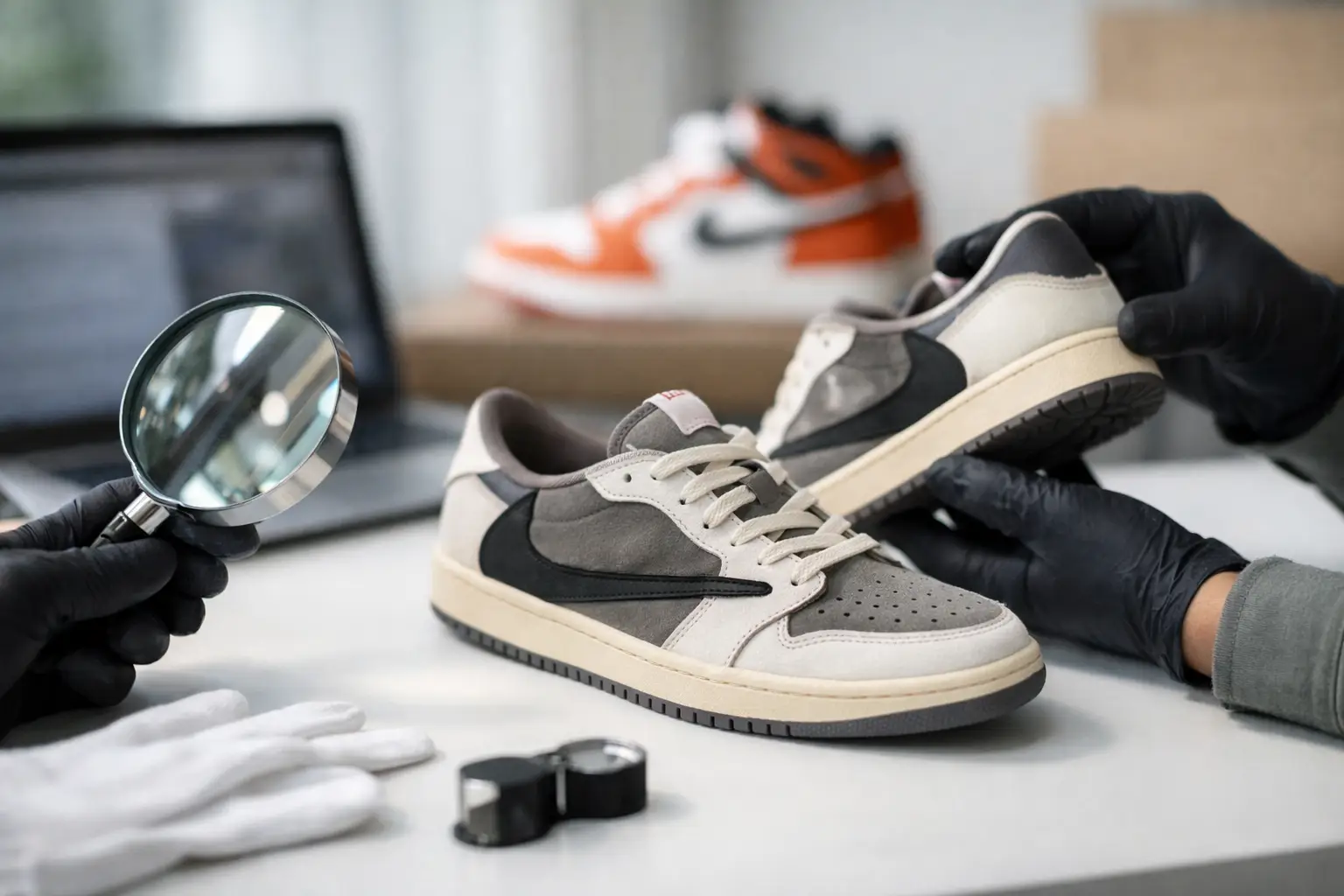
A managed marketplace gives you more protection than a direct peer-to-peer deal because the item is checked before final delivery. That extra operational layer matters. If a platform verifies every pair, holds payment during the process, and provides a refund path when the item does not match the listing, your risk profile changes immediately.
This is where many buyers make the wrong trade-off. They chase the lowest asking price and ignore transaction structure. Sometimes that works. Often it does not. A pair that looks cheaper upfront can become more expensive if you end up dealing with counterfeit product, undisclosed wear, missing accessories, or a dispute that goes nowhere.
Start with the marketplace, not the listing
If you are buying on the secondary market, the platform matters as much as the product. A trustworthy marketplace should make its protections clear before you ever check out. You should be able to see that items are authenticated by experts, payments are protected, orders are tracked, and buyers have a defined remedy if the pair fails verification or does not match the listing.
That level of control separates a specialized resale platform from a generic listing site. General marketplaces can offer volume, but volume alone does not protect your purchase. Operational control does. When the platform manages verification and shipment, there is less room for seller error, fraud, and last-minute surprises.
For buyers who source frequently, this becomes even more important. One failed purchase can wipe out the margin from several good ones. Collectors feel the pain in a different way. If you have been hunting a pair for months, the last thing you want is a questionable box, inconsistent materials, or a return process that turns into a negotiation.
Read the listing like an authenticator would
Even on an authenticated marketplace, good buying habits still matter. Authentication is not a substitute for reading carefully. It is the final control layer, not the first.
Start with the basics: size, condition, SKU, colorway name, release version, and included extras. Those details sound simple, but they are where confusion starts. A seller may list the right model with the wrong year. A pair may be authentic but not the exact release you expected. A box lid could be missing. Extra laces might not be included. If you are buying for personal wear, some of that may not matter. If you are buying for collection value or resale, it absolutely does.
Photos should match the price point. If a pair is listed as near deadstock or premium condition, you should expect clear images of uppers, soles, heel drag, insoles, tags, box label, and any flaws. Poor photos are not always a sign of fraud, but they are often a sign of friction. Friction slows decisions, creates uncertainty, and increases the odds of a mismatch between expectation and reality.
Descriptions should also be specific. “Worn a few times” means almost nothing without visual proof. “Minor flaws” should be spelled out. The more precise the listing, the easier the authentication process and the safer the purchase.
Price matters, but context matters more
A low price is only attractive if the rest of the listing makes sense. In resale, extreme underpricing usually means one of three things: the seller needs a fast sale, the listing has hidden issues, or the item is not what it claims to be.
That does not mean every deal is suspicious. Some sellers move inventory aggressively. Some sizes lag. Some pairs lose heat. But if the market average is clustered in one range and a listing appears far below it, pause and assess why. Compare condition, completeness, timing, and platform protections before you treat it like a win.
The same logic applies on the high end. A higher price does not guarantee a better pair. Sometimes you are paying for cleaner photos, better packaging, or stronger seller reputation. Sometimes you are just paying a premium with no extra value behind it. The smart move is to weigh the total offer: verified authenticity, disclosed condition, shipping speed, and buyer protection.
How to buy authenticated sneakers when condition is everything
Authentication confirms legitimacy. It does not erase wear. Buyers often collapse those two issues into one, and that is where disappointment starts.
A pair can be fully authentic and still be the wrong buy if the condition is overstated. Midsole yellowing, sole separation, star loss, heel drag, odor, replacement insoles, and damaged boxes all affect value. For older releases, some flaws are normal and should be priced in. For newer pairs, they should be clearly disclosed and reflected in the ask.
This is where your purpose matters. If you are buying to wear, cosmetic flaws may be acceptable if the price is right. If you are buying for investment, archive value, or clean inventory turnover, your standards should be tighter. There is no single correct threshold. There is only the threshold that fits your objective.
That is another reason authenticated platforms are useful. They reduce authenticity risk, which gives you more room to focus on commercial details like condition grade, turnaround time, and market value instead of spending all your energy trying to determine whether the pair is even real.
Know what buyer protection should actually cover
Buyer protection gets mentioned often, but not all policies mean the same thing. Before you purchase, understand what triggers a refund, what happens if a pair fails authentication, and how item mismatch is handled.
Strong protection usually covers three points. First, your payment is not released blindly before verification. Second, the item is inspected against the listing. Third, there is a defined process if the pair is fake, materially different, or unable to pass authentication.
That structure matters more than broad marketing language. “Protected” is only useful if the policy has real operational steps behind it. If a platform verifies every item before shipment and offers a refund guarantee for mismatches, that is a measurable layer of certainty. Solepoint is built around that model because resale confidence comes from execution, not promises.
Speed is part of trust
Authentication should add safety, not unnecessary delay. Buyers want verification, but they also want movement. A platform that authenticates efficiently and ships with tracking keeps the transaction credible from checkout to delivery.
Slow processing creates a different kind of risk. It ties up capital, disrupts resale timing, and leaves too much room for uncertainty. For personal buyers, that is frustrating. For volume buyers, it is expensive. Fast verification and tracked delivery are not just convenience features. They are part of what makes an authenticated purchase workable at scale.
That is especially true in a market shaped by release cycles and momentum. If you are buying around a restock, a trend spike, or a seasonal demand shift, time changes value. The best purchase is not just authentic. It arrives when it still makes sense.
The smartest buyers reduce variables
Experienced buyers do not rely on instinct alone. They build repeatable filters. They buy through platforms with expert authentication. They avoid vague listings. They check whether the condition matches the price. They favor sellers and systems that make fewer assumptions necessary.
That does not remove all trade-offs. Sometimes the cheapest route is direct. Sometimes a verified marketplace costs slightly more. But the extra cost often buys exactly what the resale market lacks most: certainty. And certainty has value, whether you are adding to your rotation, sourcing inventory, or chasing a pair you cannot afford to get wrong.
If you approach resale with the same discipline you use to evaluate the shoe itself, you will make better buys. Not louder buys, not faster impulse buys - better ones. In this market, that is usually what pays off.