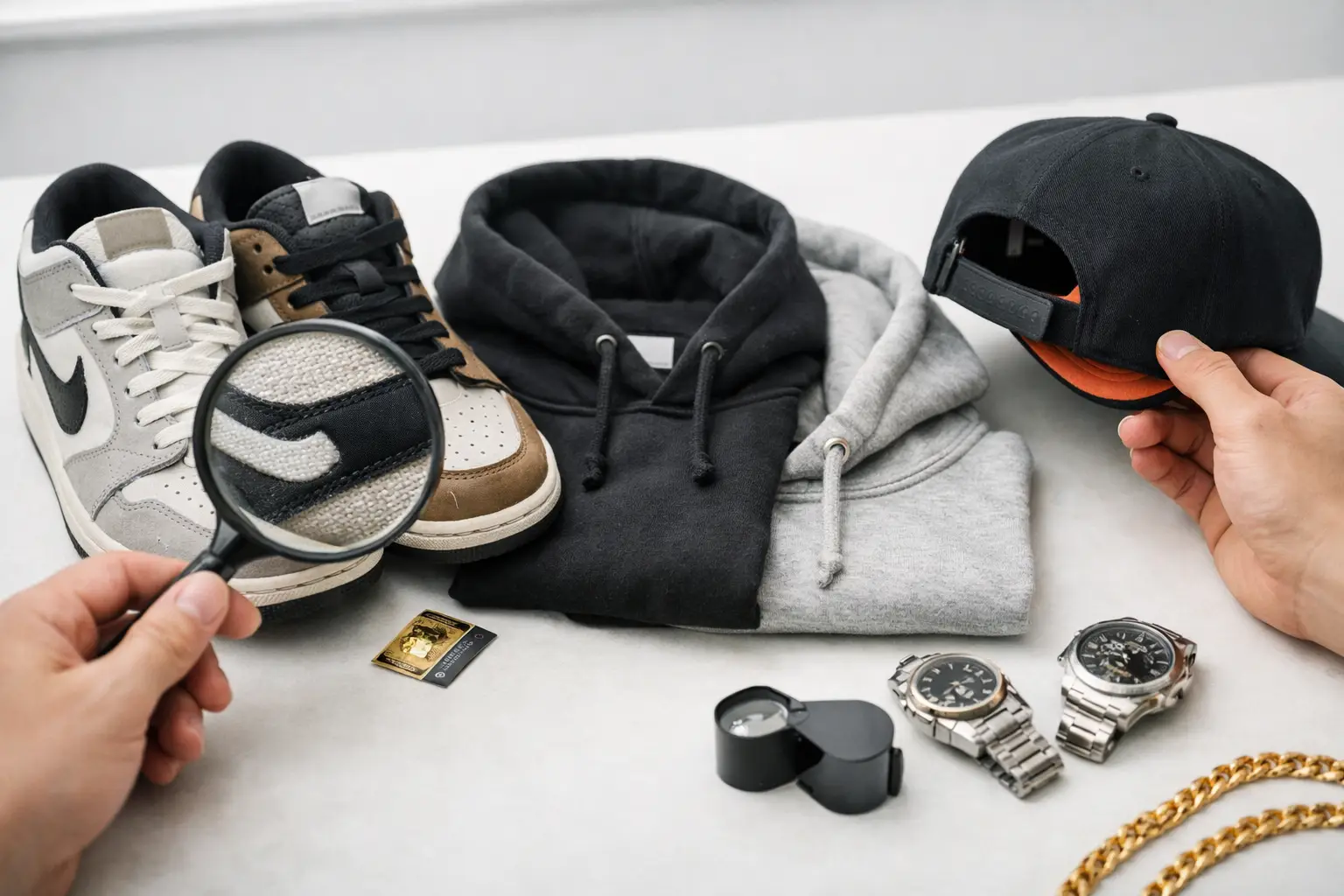
That "steal" usually gets expensive the moment the package lands. In streetwear, the top signs of fake streetwear often show up before checkout - in the photos, the pricing, the tags, and the way a seller avoids specifics. If you buy to wear, collect, or resell, spotting those signals early protects both your money and your credibility.
Why fake streetwear is harder to catch now
Counterfeits have moved well beyond obvious misspellings and sloppy blanks. A lot of replicas now copy wash tags, packaging, and even seasonal details closely enough to fool casual buyers. The problem is that streetwear value often sits in small differences: the right blank, the correct print density, the expected fit, the proper release context.
That means authentication is rarely about one giveaway. It is usually a pattern. A weak neck tag on its own might not prove anything. Pair it with an off retail price, poor stitch consistency, and seller photos that avoid key angles, and the risk goes up fast.
Top signs of fake streetwear in the product itself
The first place to look is construction. Authentic premium streetwear usually has a clear standard, even when brands change factories across seasons. Counterfeits tend to miss that consistency.
Tags that look close, not correct
Tags are one of the most common failure points. Fake pieces often get the brand logo mostly right, but the font weight, spacing, stitching, or tag material feels slightly off. Sometimes the text is too crisp because it was printed cheaply. Other times it is blurry, crooked, or attached with uneven stitching.
Wash tags matter just as much. Look at fabric composition, country of manufacture, care instructions, punctuation, and line spacing. Many counterfeit garments use generic care tags or copy the wording from another release. If the item is supposed to be from a specific season, the tag format should make sense for that era and product type.
Stitching that lacks consistency
Good streetwear is not always luxury-level in construction, but it is usually consistent. Uneven hems, loose threads in multiple places, skipped stitches, warped collar seams, or poor overlock finishing are strong warning signs. A fake can still look clean in one photo, so zoom in on stress points like the collar, cuffs, side seams, and hem.
It depends on the brand, though. Some labels intentionally use heavier, rougher blanks or vintage-style finishes. The question is not whether the garment looks perfect. The question is whether the quality matches what that brand normally puts into retail product.
Prints and embroidery with the wrong feel
Graphic quality is a major tell. On authentic pieces, prints usually have the right placement, scale, and saturation for the release. Fakes often miss one of those. The graphic may sit too high on the chest, run too large across the back, or show colors that are slightly too bright or too dull.
Texture matters too. Screen prints should not feel plasticky unless the original was made that way. Puff print should have the right raise and edge definition. Embroidery should look clean on the front and organized on the reverse. If logos look thick, shaky, or poorly centered, that is a problem.
Blank, fabric, and weight that feel wrong
A lot of counterfeiters focus on branding and forget the base garment. But serious buyers know that blank quality is often where authenticity shows. Premium hoodies and tees have a specific hand feel, weight, drape, and structure. If a hoodie that should feel dense and structured arrives thin and limp, that is not a small issue.
Fabric composition can also expose a fake. If a product is supposed to be 100% cotton heavyweight fleece and the tag says a poly blend, something is off. Even when the listed composition matches, the garment may still feel wrong in practice. That is why experienced buyers compare not just visuals, but expected material behavior.
Top signs of fake streetwear in the listing
Before you ever inspect the garment in hand, the listing itself often tells you a lot. Bad inventory usually comes with bad listing discipline.
Prices that ignore the market
If a recent, high-demand piece is listed far below market without a clear reason, treat that as a risk signal. Not every low price means fake. Sometimes sellers need fast cash, sometimes condition issues are real, and sometimes sizing reduces demand. But if the discount is aggressive and the rest of the listing is vague, the odds are not in your favor.
Streetwear resale runs on reference points. Buyers who know the range for a box logo, limited capsule tee, or hype collaboration are much harder to fool. Price should never be your only filter, but it is one of the fastest ways to spot a listing that deserves extra scrutiny.
Photos that hide the important parts
Real sellers with real product can usually provide clear photos of tags, stitching, print detail, and any flaws. Fake sellers often lean on cropped images, low light, heavy filters, or screenshots pulled from somewhere else. If you only see front and back product shots with no close-ups, that is a weak listing.
You want to see the neck tag, wash tag, inside seams when relevant, print texture, embroidery detail, and overall condition. For collectible streetwear, packaging and accessories can matter too, but they should never outweigh the garment itself. Counterfeit extras are easy to fake.
Descriptions that stay generic
A seller moving authentic product usually knows what they have. They can identify the season, color, condition, fit, and any defects with confidence. A vague description like "100% legit, trust me" does not help. Neither does a listing that avoids naming the collection or release details.
The more expensive the item, the more precision you should expect. Missing size measurements, unclear flaws, or copy-paste descriptions are all reasons to slow down.
Seller behavior can be one of the biggest tells
Sometimes the garment looks decent, but the seller does not. That matters.
Evasive answers and pressure tactics
If a seller avoids simple requests for tag photos, proof of purchase, or better lighting, that is a problem. If they try to rush payment, move the deal off platform, or say "I have five other buyers ready," that is another. Fraud often depends on speed. Careful transactions depend on documentation.
Legitimate sellers may not always have receipts, especially in resale, but they should be able to answer basic product questions. Evasion is not proof of a fake, but it is often part of the pattern.
Too much stock with too little context
One or two similar items can be normal. Ten identical "personal" pieces in multiple sizes is different. High-volume supply is not suspicious on its own - plenty of professional sellers source inventory at scale. What matters is whether the account presents that inventory transparently and consistently.
If the seller has large quantities of high-demand pieces and almost no detail on sourcing, condition grading, or item variation, caution makes sense. Consistency in photos, descriptions, and transaction terms matters.
The details that buyers often overlook
A lot of mistakes happen because people focus only on logos. Strong replicas can copy logos well enough to pass at a glance. The smaller context clues are often more useful.
Sizing is one. If a brand is known for boxy cuts, cropped proportions, or oversized shoulder width, a standard mall-brand fit is a red flag. Measurements can reveal what photos hide.
Release logic is another. Ask whether the item makes sense as a real product. Did that colorway actually release? Was that graphic used on that garment type? Did the brand make that collaboration in that season? Counterfeits often combine real design elements into products that never existed.
Packaging should be treated carefully. Dust bags, stickers, branded sleeves, and receipt copies can help build context, but they do not authenticate a garment on their own. Fakes often overperform on extras because buyers put too much trust in them.
How to reduce risk before you buy or resell
The safest approach is not trying to become an instant expert on every brand. It is building a process. Compare the item against known release details. Check market pricing. Ask for specific photos. Review measurements. Look for consistency across tags, fabric, print, and seller behavior.
If one detail feels off, keep checking. If three or four details do not line up, walk away. There will always be another listing. Protecting margin is just as important as finding product.
This matters even more if you resell. One bad buy does not just hurt profit. It can damage customer trust, trigger returns, and stall inventory flow. That is why many serious buyers and sellers prefer authenticated channels where every item is verified before shipment. Platforms built around authentication, managed payments, and buyer protection remove a huge amount of avoidable risk from the deal.
Streetwear moves fast, but fake product usually leaves clues. The buyers who win long term are not the ones chasing every bargain. They are the ones who know when a deal looks wrong and have the discipline to pass.