A sneaker can look perfect in photos and still fail authentication the moment it hits the inspection table. That gap is exactly why understanding how sneaker authentication works matters if you buy, sell, collect, or source inventory at scale. In resale, the difference between a clean flip and a costly mistake often comes down to what gets checked, who checks it, and how tightly that process is controlled.
How sneaker authentication works in practice
At a serious resale platform, authentication is not one quick glance at the box label. It is a structured review of the product, the listing, and the condition of the item against known manufacturing details. The goal is simple - confirm that the pair is genuine and that it matches what the buyer was promised.
In a managed marketplace model, the process usually starts after a sale is made. The seller ships the sneakers to an authentication center instead of directly to the buyer. That extra step is where risk gets removed from the transaction. The item is received, logged, matched to the order, and routed for inspection before it is approved for shipment.
This matters because counterfeit risk does not sit in just one place. Some pairs are obvious fakes. Others are high-grade replicas built to pass casual checks. Some are authentic pairs listed inaccurately, with swapped insoles, replacement boxes, heavy wear, or undisclosed flaws. Real authentication has to catch all of that, not just the easy stuff.
What authenticators actually check
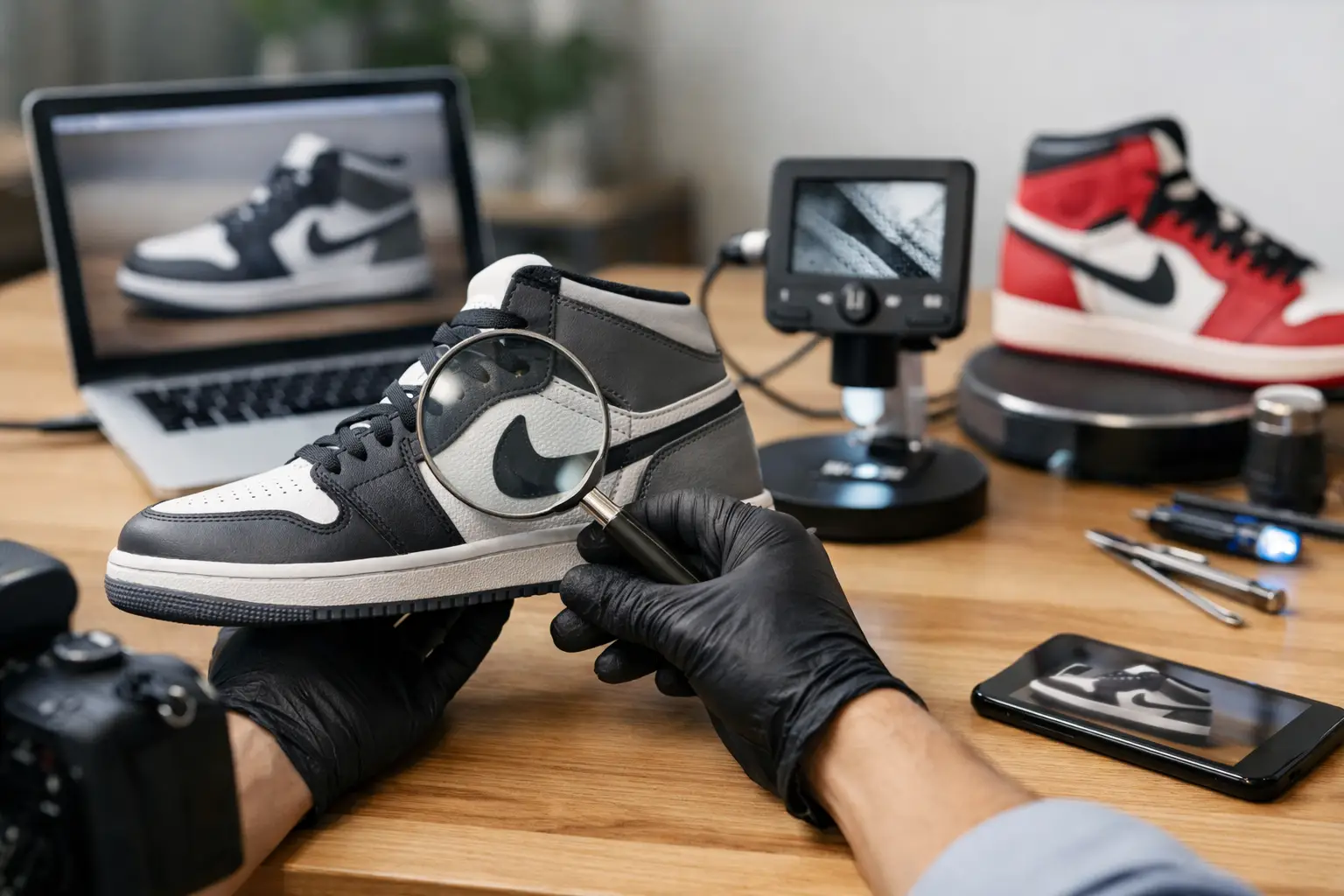
The inspection itself is layered. Experts look at the sneakers as a full product, not as isolated details. A fake label can be attached to a convincing upper. Real shoes can come in fake boxes. A used pair can be cleaned up just enough to look better in listing photos than it does in person. Good authentication accounts for the whole picture.
Box, labels, and packaging
The first review often starts before the shoes even come out of the box. Authenticators check the box shape, label format, font spacing, SKU, size conversion details, and print quality. They compare those details against known release information for that exact model, colorway, region, and production period.
Packaging alone never proves authenticity, because boxes can be swapped or reproduced. But it can expose early problems. If the size tag says one thing and the box label says another, or if the paper, sticker placement, and accessory set do not line up with the release, the pair needs deeper scrutiny.
Shape, materials, and construction
This is where experience matters most. Authenticators examine the silhouette, panel cuts, stitching consistency, glue patterns, edge finishing, perforation placement, and material quality. They know how a legitimate pair should feel in hand, how the leather should react under light, how mesh should sit, and where shape errors tend to show up on replicas.
Different models fail in different ways. A Jordan 1 fake might get the swoosh curve or toe box wrong. A Yeezy fake might miss knit texture, sole tone, or heel shape. [A Dunk (https://solepoint.eu/hu/collections/sneaker/dunk-low) fake might look close from above but reveal itself in the tongue padding or stitching spacing. There is no single universal checkpoint, which is why model knowledge matters.
Size tags, date codes, and internal details
Inside the shoe, authenticators inspect size labels, production codes, font weight, country of manufacture, and spacing. These small details are difficult for counterfeit operations to replicate perfectly across every release. They also compare left and right shoes for consistency. Mismatched tags, uneven printing, or code formats that do not align with the model can be a serious red flag.
Internal construction can also tell the story. Sockliner texture, insole print, strobel stitching, glue application, and lasting patterns often separate authentic product from replicas. Buyers rarely see these details in listings, but they matter during verification.
Outsoles, logos, and finishing
The outsole pattern, logo placement, mold definition, and paint edges are checked closely. Counterfeit factories often get broad design cues right while missing precision in finishing. That can show up in sloppy logo embossing, weak traction geometry, or color separation that looks slightly off under direct light.
Again, no single flaw proves the whole case. Authentication works by stacking signals. One oddity might be a factory variance. Several inconsistencies across packaging, shape, labeling, and construction point to a much clearer answer.
Authentication is comparison, not guesswork
The public often imagines authentication as instinct. In reality, strong authentication is a comparison process built on reference knowledge. Experts compare the pair in front of them to verified examples, known factory standards, historical release details, and manufacturing patterns seen across genuine stock.
That is why specialized operators have an advantage over general peer-to-peer marketplaces. If the platform controls intake, inspection, and final release, the authenticator is not relying on seller claims or buyer judgment. They are reviewing the physical item directly, with accountability built into the transaction.
This also explains why photos alone are not enough for high-trust resale. Image-based checks can help screen obvious issues before a sale, but they cannot fully replace hands-on verification. Lighting hides flaws. Angles distort shape. Sellers can miss details without meaning to. And bad actors know exactly which photos buyers expect to see.
Why some fakes still look convincing
The counterfeit market has become more sophisticated because the incentive is obvious. Limited sneakers hold value, and demand moves fast. Better fake factories study retail pairs, improve materials, and refine packaging to get closer to the real thing.
That does not mean authentication is broken. It means the process has to be disciplined. High-quality fakes usually fail on cumulative detail, not one dramatic mistake. They might copy the color well but miss the proportions. They might recreate the box but use the wrong label format. They might get the upper close while the interior construction gives them away.
There is also the issue of legitimate manufacturing variation. Authentic pairs are not always identical. Factories differ. Production runs shift slightly. Glue marks, stitch tension, and material grain can vary from pair to pair. Good authentication does not confuse normal variance with counterfeit evidence. That judgment is what separates expert review from internet checklist culture.
The role of condition verification
Authenticity is only part of the transaction. The item also needs to match the listing. A buyer paying for a new pair expects factory-fresh condition, original accessories if stated, and no hidden wear or damage. A seller listing used sneakers needs those signs of wear represented accurately.
That is why a proper verification process checks condition and completeness alongside legitimacy. Inspectors review sole wear, heel drag, creasing, discoloration, odors, lace swaps, replacement insoles, damaged boxes, and missing extras. For buyers, that reduces surprise. For sellers, it creates a cleaner standard that serious buyers trust.
This is especially important for business buyers and frequent resellers. If you are sourcing multiple pairs, one bad unit can erase margin across the order. Certainty has direct commercial value.
Where marketplace structure matters most
Not every platform handles authentication the same way. In open peer-to-peer marketplaces, buyers and sellers often absorb more risk because the platform has limited control over the item once listed. In a managed model, the platform sits in the middle, verifies the product, protects payment, and releases the order only after approval.
That structure changes the transaction. Buyers get more confidence because the pair is checked before shipment. Sellers benefit too, because a verified process builds trust and helps serious listings convert faster. Marketplaces like Solepoint are built around that operational control - authentication, protected payments, and tracked delivery working together instead of leaving users to sort out disputes on their own.
Speed matters here, but speed without discipline is just another risk. The strongest authentication systems are designed to move fast without turning verification into a formality. That balance is what makes a platform useful for both collectors buying grails and sellers moving inventory consistently.
What buyers and sellers should take from the process
If you are buying, the main question is not whether a pair looks good in photos. It is whether the marketplace has a real verification step before the shoes reach you. If you are selling, authentication should not be seen as friction. It is what makes premium resale possible at scale.
Understanding how sneaker authentication works helps you spot the difference between a platform that claims trust and one that operationalizes it. Real authentication is physical inspection, model-specific expertise, order matching, condition review, and controlled release. Anything less leaves too much room for counterfeit product, inaccurate listings, and expensive disputes.
The resale market rewards confidence. The smartest way to build it is simple - put every pair through a process strong enough to stand between hype and reality.