The difference between a good flip and a costly mistake usually comes down to two things: product knowledge and platform trust. In sneaker resale, hype gets attention, but execution makes money. If you buy too high, sell too late, or move through the wrong channel, even a strong release can turn into dead inventory.
That is why the resale market rewards people who think beyond launch day. The most consistent buyers and sellers understand demand curves, condition standards, authentication risk, payout speed, and buyer expectations. They are not just chasing pairs. They are managing margin.
What sneaker resale actually is
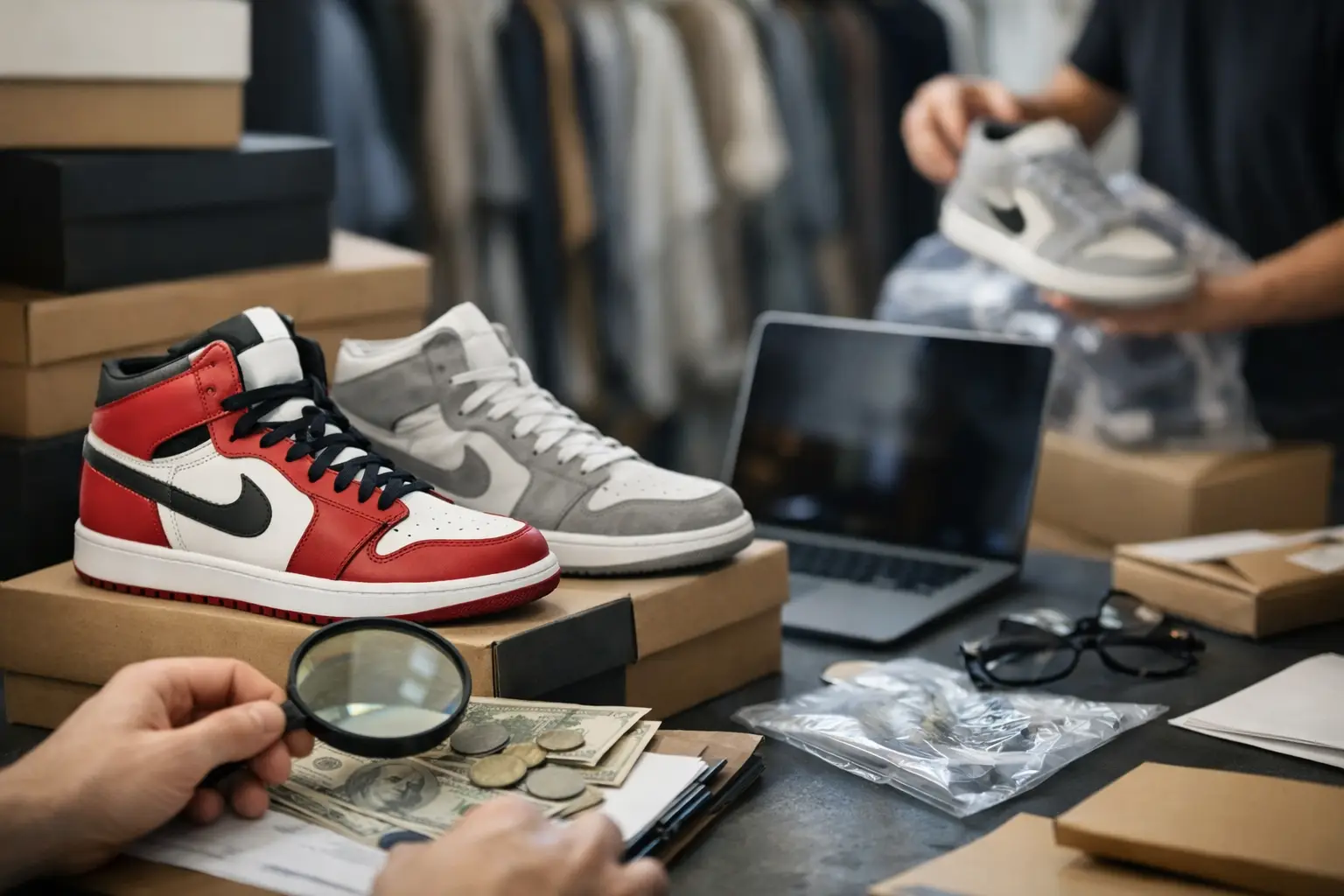
Sneaker resale is the secondary market for footwear sold after its original retail release. That includes deadstock pairs, lightly worn sneakers, collectible collaborations, regional exclusives, and older models that have gained value over time. The market sits at the intersection of fashion, scarcity, and commerce.
For buyers, resale creates access. It is often the only way to get a sold-out size, a limited collaboration, or a past release no retailer still carries. For sellers, it turns product knowledge into liquidity. A pair bought for personal use can become an asset. A well-timed inventory buy can become working capital.
But resale is not a guaranteed profit machine. Prices move. Hype cools. Some pairs spike early and fade fast. Others sit for months before demand catches up. The market can be lucrative, but it is rarely forgiving.
Why sneaker resale keeps growing
The basic driver is simple: retail supply is limited, while demand is global. Brands release products in controlled quantities, often through raffles, exclusive drops, and selective retail partners. That scarcity creates a gap between what the market wants and what retail channels can fulfill.
Social media accelerates the effect. A pair can move from niche interest to mainstream demand in hours. Athletes, artists, and creators influence what gets attention, but attention alone does not sustain value. What matters is whether buyers still want the pair once the first wave of excitement passes.
That is where the market becomes more disciplined than it looks from the outside. The strongest resale categories tend to have one or more of the following: recognizable silhouettes, proven cultural relevance, limited availability, and broad size demand. A loud collaboration may get headlines, but an easy-to-wear colorway in a classic model often produces steadier volume.
The real economics of sneaker resale
Margin in sneaker resale is shaped by more than the spread between retail and sale price. Fees, shipping, payment processing, taxes, return exposure, and time-to-sale all affect the final number. A pair that looks profitable on paper can become average once the full transaction cost is included.
This is where many newer sellers misread the market. They focus on top-line sale prices instead of net returns. Selling fast at a slightly lower price can outperform holding out for the last possible dollar, especially if your capital is tied up across multiple pairs.
There is also a difference between market price and achievable price. The highest visible listing does not mean the pair is actually moving there. Serious sellers watch completed sales, size-specific demand, and velocity. A size 9 might move quickly at one price while a size 13 stalls entirely. In a category built on nuance, averages can be misleading.
What buyers care about most
Buyers want authenticity first, then accuracy, then speed. That order matters.
A buyer may accept a slightly higher price if the transaction removes doubt. They want confidence that the sneakers are real, the condition matches the listing, the payment is protected, and the package will arrive as expected. On general peer-to-peer platforms, those basics are often the biggest source of friction.
Condition also matters more than many sellers assume. A box corner crush, yellowing sole, swapped insole, or missing accessory can shift value quickly, especially on premium pairs. The higher the price point, the less tolerance there is for vague descriptions. Clear listings do not just reduce disputes. They convert faster.
Speed matters because buyers in this category are often balancing urgency with skepticism. They may be shopping for a release they missed, a replacement pair, or inventory for resale. Delays create doubt. A managed marketplace with authentication and tracked delivery solves a large part of that problem because the process is controlled instead of improvised.
Sneaker resale depends on trust
Trust is the core infrastructure of sneaker resale. Without it, pricing weakens, disputes rise, and repeat customers disappear.
Counterfeits are the clearest example. They distort the market in two ways. First, they create direct risk for buyers. Second, they force legitimate sellers to work harder to prove their inventory is genuine. Authentication is not just a protective feature. It is a pricing advantage because it gives buyers a reason to transact with confidence.
This is why specialized platforms outperform open marketplaces for serious buyers and sellers. When every item is verified before final shipment, the marketplace is doing more than checking legitimacy. It is standardizing trust. That reduces fraud, improves transaction quality, and creates a better environment for premium goods to move at fair market value.
For sellers, that trust layer matters too. Protected payments, fast verification, and reliable payouts make the business more predictable. If you are moving volume, predictability is not a luxury. It is part of your operating model.
How sellers win in sneaker resale
The best sellers are rarely the loudest. They are the most consistent.
They source selectively, not emotionally. They know which releases have genuine secondary demand and which ones are running on short-term noise. They understand that a profitable month often comes from disciplined singles and doubles, not one miracle score.
They also price with intent. If the goal is cash flow, they list to sell. If the goal is maximizing return on a harder-to-find pair, they account for seasonality, market scarcity, and buyer timing. There is no single right strategy. It depends on how quickly the seller needs liquidity and how replaceable the inventory is.
Operationally, the winning habits are simple. Use accurate condition notes. Include all accessories. Store pairs properly. Keep boxes clean. Track size performance. Review market movement regularly instead of assuming yesterday's price still holds. These are small details, but in resale, small details often decide whether a listing converts or sits.
How buyers shop smarter
Smart buyers do not chase every spike. They buy with a reason.
Sometimes that reason is personal wear. Sometimes it is collecting. Sometimes it is inventory. Each use case changes what matters most. A personal buyer might prioritize size availability and condition. A collector may care more about completeness, packaging, and long-term significance. A resale buyer is focused on entry price, liquidity, and downstream demand.
Patience can create opportunity, but not always. Some pairs drop after launch when early supply floods the market, then climb once available pairs thin out. Others peak immediately and soften once the initial buzz fades. The right move depends on the release profile, not a blanket rule.
That is another reason trusted marketplaces matter. They let buyers focus on product and price instead of spending energy assessing whether the entire transaction is credible.
Where the market is heading
Sneaker resale is becoming more professional. That does not mean it is losing its culture. It means the standards are getting higher.
Buyers expect cleaner listings, faster fulfillment, and stronger protection. Sellers want lower friction, broad demand, and quicker access to payouts. Marketplaces that can combine authentication, operational control, and international buyer access are better positioned than platforms that simply connect two strangers and leave the risk on both sides.
This shift also benefits serious participants. As the market matures, trust becomes a stronger differentiator than hype alone. That favors platforms built around verification, logistics, and buyer protection. It also favors sellers who treat resale like a business, even if they started as collectors.
For a trust-first marketplace like Solepoint, that model fits where the category is headed. Every item verified. Every transaction protected. That is not just good branding. It is what the market increasingly requires.
The bottom line on sneaker resale
Sneaker resale works best when scarcity meets structure. Demand creates opportunity, but trust is what turns that opportunity into repeatable business. Whether you are buying one pair or moving inventory at scale, the same rule applies: the cleaner the process, the stronger the outcome.
The market will always reward timing and taste. Over time, though, it rewards discipline even more.