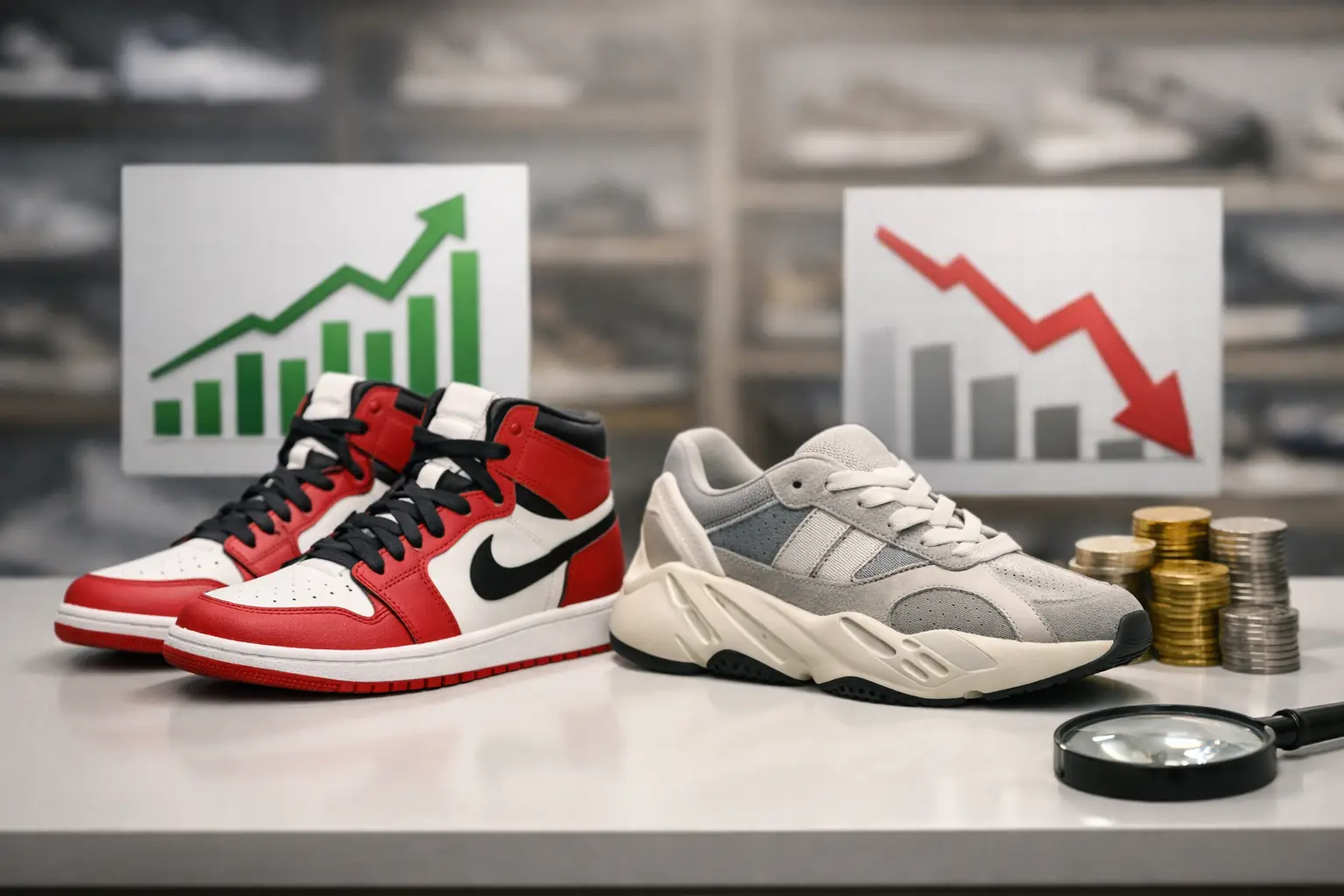
A few years ago, almost any hyped release could find a resale premium. That window is narrower now. Sneaker resale trends 2026 are shaping up around a more disciplined market - one where verification, pricing accuracy, and speed matter more than hype alone.
That shift is good for serious buyers and serious sellers. Casual speculation is getting squeezed, while operators with better data, stronger sourcing, and access to trusted authentication are gaining an edge. If you collect to wear, buy to hold, or source to flip, 2026 looks less like a gold rush and more like a professional market.
Sneaker resale trends 2026 are getting more selective
The biggest change is simple: not every limited pair will win. Buyers are becoming more selective about what deserves a premium, and sellers are adjusting expectations. That means wider separation between true demand and artificial scarcity.
In practice, the strongest performers are likely to share three traits. First, they have cultural staying power beyond release day. Second, they come with clean product stories - strong collaborations, recognizable design language, or clear ties to sport, music, or fashion. Third, they stay liquid in common sizes. A sneaker can be rare and still be hard to move if the audience is too narrow.
This is where many sellers get caught. They price based on headline hype, but the market clears based on actual buyer confidence. If a pair is easy to fake, inconsistently listed, or slow to authenticate, buyers hesitate. In 2026, hesitation costs conversions.
Trust is becoming a pricing factor
Authentication used to be treated as a safety feature. Now it is part of the product. Buyers are not just paying for a sneaker - they are paying for certainty around condition, legitimacy, delivery, and dispute protection.
That matters because the secondary market has matured. A buyer spending serious money on a pair of Jordans, Kobes, New Balance collaborations, or archival streetwear sneakers is comparing more than price. They are weighing total transaction risk. A slightly cheaper listing on an unstructured marketplace can become expensive fast if the item shows up used, altered, fake, or not as described.
For sellers, this changes margin strategy. The lowest list price does not always win. Verified inventory with accurate photos, clear condition grading, and fast processing often supports better sell-through because buyers trust the transaction. Marketplaces that control authentication and payment protection are positioned to capture that shift because they reduce the friction that kills high-value resale.
Pricing will get sharper, not higher
One of the clearest sneaker resale trends 2026 points to is pricing efficiency. That does not mean resale disappears. It means lazy pricing gets exposed faster.
More sellers now have access to historical sales data, release calendars, SKU matching, and real-time comps. Buyers have the same visibility. As a result, obvious overpricing sits longer, while correctly priced pairs move quickly. The spread between bid and ask should tighten across many mainstream hype models.
There is a trade-off here. Better pricing transparency can compress margins on widely available pairs, especially for sellers who rely on quick flips. At the same time, it can improve inventory turnover and reduce dead stock. For professional resellers, faster capital rotation may matter more than chasing the last few dollars of margin.
The pairs most likely to hold stronger premiums are the ones with limited restock risk, clean provenance, and broad cultural relevance. General release heat can still move, but often on shorter windows. If you are holding inventory too long, the market may pass you by.
Fast flips versus long holds
In 2026, the decision between flipping immediately and holding longer will depend more on category. Performance basketball retros, regionally constrained releases, and collaborations with lasting brand equity may still justify a hold. More trend-driven lifestyle pairs may peak early and flatten faster.
Condition also matters more than many sellers admit. Deadstock remains the standard for pure investment logic, but excellent used pairs are gaining importance for value-focused buyers who want authenticity without paying top-of-market prices. That creates opportunity in both ends of the market, as long as listings are precise.
Older models and overlooked eras are coming back
Not every growth story will come from the newest drop. A quieter trend heading into 2026 is renewed demand for older silhouettes, underappreciated collaborations, and pairs that were ignored during peak hype cycles.
That does not mean every forgotten sneaker becomes valuable. It means buyers are broadening their taste. As the market gets more educated, design, era, wearability, and originality can matter as much as social media noise. We are already seeing stronger interest in pairs with distinct shape, better materials, and more specific cultural context.
For collectors, that creates room to buy more intelligently. For sellers, it means sourcing can no longer rely only on obvious heat. The best inventory may come from categories that still look underpriced relative to their long-term relevance.
This is especially true when mainstream hype is soft. When headline releases become less predictable, buyers often move toward pairs with proven identity. Those shoes may not always produce explosive gains, but they can offer steadier liquidity.
Buyers will expect better listings and faster fulfillment
The resale customer in 2026 is less forgiving. If the box condition is unclear, the SKU is missing, the photos are weak, or the shipping timeline is vague, conversion drops. Better buyers have been trained by better platforms. They expect accuracy, speed, and protection as standard.
This raises the bar for every seller. High-performing listings will need clean images, consistent sizing information, honest condition notes, and realistic pricing from the start. Ambiguity slows trust. Trust slows sales when it is missing.
Fulfillment will also matter more than many resellers think. A good price can lose to a faster, safer transaction. Buyers sourcing for personal wear want reliability. Business buyers sourcing inventory want predictability. Both are more likely to pay when they know what happens next.
That is why managed marketplaces have an advantage over pure peer-to-peer models. When verification, payment handling, and shipment tracking sit inside the transaction flow, the experience becomes more efficient for both sides. Solepoint is built around that logic: every item verified, every transaction protected.
Global demand is still strong, but access will matter
Cross-border resale is not slowing down, but it is becoming more operational. International buyers still create pricing opportunities, especially for scarce sizes, regional releases, and sought-after collaborations. The challenge is execution.
In 2026, access to global demand will be less about simply listing online and more about listing in the right environment. Currency shifts, shipping costs, import friction, and fraud exposure all affect real profitability. A sale is only a good sale if it closes cleanly and pays out fast.
For sellers moving volume, platform infrastructure becomes part of the business model. The right marketplace can expand buyer reach without adding unmanaged risk. The wrong one can create delays, disputes, and avoidable losses.
What this means for professional sellers
Professional resellers and inventory buyers are likely to focus on three things: reliable sourcing, faster turnover, and lower transaction risk. The market is rewarding operators who can price accurately, move product efficiently, and avoid capital getting trapped in bad listings or failed deals.
That may mean buying fewer pairs but buying better. It may also mean being more willing to sell into smaller margins if the platform offers strong buyer confidence and rapid payout. In a tighter market, certainty has value.
The market is maturing, not cooling off
There is a difference between a market losing energy and a market losing inefficiency. Sneaker resale in 2026 looks more like the second. The easy money is thinner, but the fundamentals are stronger for disciplined participants.
That is usually a healthy sign. Mature markets reward expertise. They favor authentic inventory, accurate grading, protected payments, and platforms that can remove doubt from the transaction. They punish shortcuts.
If you are buying, that means more confidence when you choose verified inventory and less patience for risk. If you are selling, it means your edge will come from execution, not just access. Price right. List clearly. Move through trusted channels. Build around liquidity, not wishful margins.
The next wave of resale value will not belong to whoever makes the loudest claim about heat. It will belong to whoever makes the cleanest transaction possible.